|
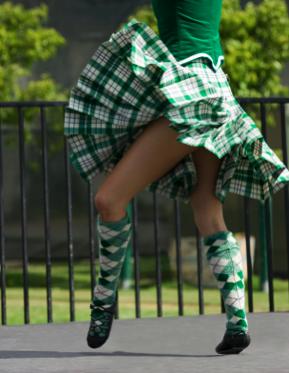
Scottish Highland DancingIts origins lie with the clansmen from the Highlands of Scotland, who performed many of the dances we still see today. One of the most famous being The Highland Fling, which is said to have been a dance of triumph at the end of a battle. The Sword Dance is yet another steeped in history, where the clansmen would dance over two naked sword blades before a battle, or as a victory dance. Below you can view a short video of the Highland Fling being performed. Legend states that the clan Chief on the eve of a battle, would call on the clan's best dancers. If they completed the dance without touching either blade with their feet, this would be considered a good omen, and victory on the battlefield would be assured. Originally these dances were always performed by men. That was until the late nineteenth century, when a young woman named Jenny Douglas entered a Highland Dancing competition. As women competitors were not strictly forbidden, they allowed her to enter, and since that day the number of females participating in the sport has increased steadily. So much so in fact, that over ninety five percent of dancers competing around the world today are female. And do bear in mind that these dances are by no means easy to perform, they are highly technical and require lots of stamina and leg strength, taking many years of practice to perfect. Dancing competitions take place mostly at Highland Games, which are staged during the summer months, in many countries around the world. Below you can see a dancer performing.
Dancer in Competition Although there is more than one governing body regulating these dancing competitions, the one most widely recognised around the world and especially in the United States, is the Scottish Official Board of Highland Dancing (SOBHD) The World Highland Dance Championships have been held every year since 1934 at the Cowal Highland Games, which take place at Dunoon, Argyle in Western Scotland. These Highland Games always take place on the last Friday and Saturday in August (if you happen to be in Scotland at that time, why not pop along and enjoy them). The SOBHD is considered by most competitive dancers as the governing body of Highland dance, and as such it is responsible for the standardisation of dancing around the world. The dancers are judged on three major criteria. Timing the ability to follow the rhythm of the music, which is almost always bagpipe music. Technique correct execution of the steps in coordination with the movements of the rest of the body. Artistic interpretation which concerns the ability of the dancer to convey a sense of feeling, understanding, and appreciation of the art form. During competition men of course dance in their kilts, whereas women are normally dressed in Aboyne dress. This consists of a dark bodice or waistcoat (vest), a decorative blouse and a tartan skirt and apron. The outfit takes its name from the Aboyne Highland Games, where to this day the wearing of the kilt by female dancers is strictly forbidden. If you have any questions to do with this or any other page of the web site, please don't hesitate to get in touch using the
Contact Us
page. |